


Case study · Mount Sinai Health System · 2026
Harnessing pharmacy's next wave of volume and complexity to drive new growth with AI
How Mount Sinai Health System used enterprise pharmacy intelligence to absorb a GLP-1 surge, win more complex cases, serve more patients and give pharmacists their time back to focus on care.
- Year-over-year prescription volume growth absorbed without adding staff
- 15-20%
- Average prior authorization turnaround, down from 25–30
- <5 min
- From decision to full enterprise pharmacy intelligence implementation
- 1 day
01 · Capacity
A pharmacy outgrowing its capacity
Mount Sinai Health System is New York City's largest integrated delivery system, with seven hospitals, more than 9,000 physicians, and over 400 ambulatory practices across the five boroughs, Westchester, and Long Island. Its specialty pharmacy, launched in 2020, runs seven locations and integrates with about 90% of those outpatient practices.
Mount Sinai had a history of scaling staffing along with prescription volume. But as volume growth neared 20% a year and high-demand specialty drugs came on the market, this practice became unsustainable. Mark Makhinson, Senior Director of Outpatient and Specialty Pharmacy, saw that hiring to keep pace with GLP-1 demand alone wouldn't make financial sense. Kenny Yu, Senior Vice President and Chief Pharmacy Officer, put it plainly. “We knew that we couldn't continue to throw people at the process, and we needed to become more efficient,” he said.

- 7
- hospitals
- 9,000+
- physicians
- 400+
- ambulatory practices
- 7
- specialty pharmacy locations
- ~90%
- of those outpatient practices
“We can't hire 200 people within a month, which is what we would need for the thousands of prescriptions that we're receiving, like the GLP-1s. We wouldn't be able to meet it just as humans.”
 Vita SchwirianDirector of Outpatient Clinical Pharmacy Services
02 · One condition
Lisa Stump knew how to tackle this challenge
When Lisa Stump joined Mount Sinai as Chief Digital Information Officer, she had already proven that technology can scale pharmacy capacity without adding to the team.
At her previous health system, Lisa worked with Latent on an early prototype that helped the specialty pharmacy team double prescription volume without adding staff.
Lisa introduced Latent to Mount Sinai with one condition. After years of doing this work, it should not take a month to stand up. Mount Sinai's IT and Digital Transformation teams worked with Latent as one unit, and the platform went live in a day.
Source: Mount Sinai Health System, 2026.
Thirty boxes in a grid, one for each day of the month. The frame closes in on the first box: one day.
“Lisa is a huge supporter of pharmacy. She is a pharmacist by trade, and it's very unique to have a CIO in that position. For her to be able to translate what the pharmacy needs are and to have her technology perspective on it, it's just very synergistic.”
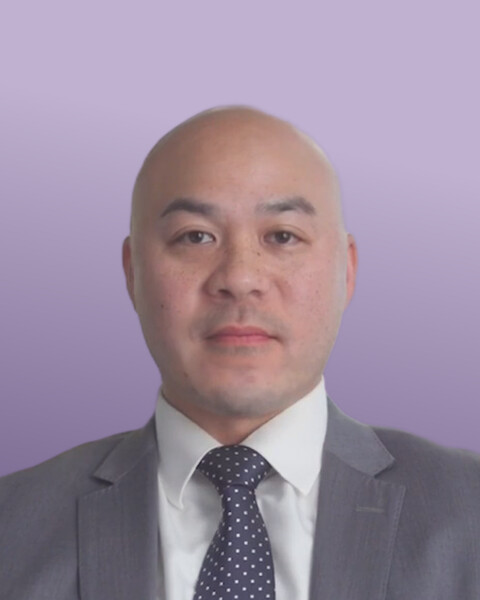 Kenny YuSenior Vice President and Chief Pharmacy Officer
03 · Adoption
Adoption took work, not a leap of faith
Mark Makhinson manages a team of more than 300 financial access coordinators and liaisons. When Latent rolled out, he heard the same question over and over. “If this automates the process, what happens to my job?”
The answer: the platform makes the job easier, taking on the administrative work so the team can spend more of their time with patients. Latent trained the team hands-on in small groups, where staff could ask hard questions and watch the system work on real cases before being asked to trust it.
Managers who picked up the platform quickly became super users and advocates for their teams. Within three months, Mark saw his team move from open skepticism to full adoption.
“We always say it's people, process and technology. Even the best technology when the people and process aren't there will fail. So, it's been that right combination.”
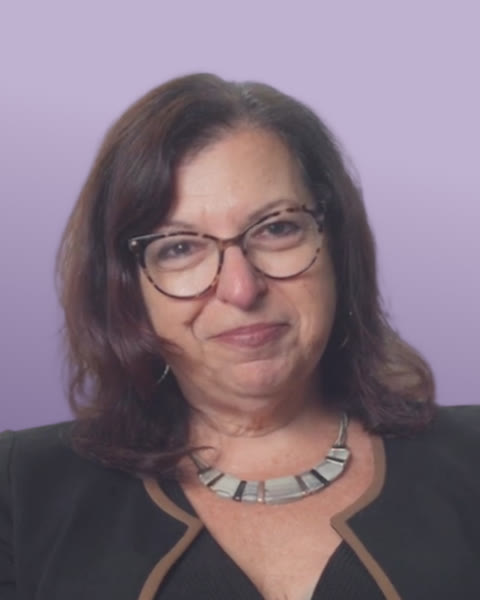 Lisa StumpChief Digital Information Officer
04 · The film
Mount Sinai: harnessing demand and complexity to grow with AI
 Kenny YuSenior Vice President and Chief Pharmacy Officer
A film frame, then the axis as the film's timeline: five marked moments the reader can jump to.
05 · Speed
Speed becomes capacity
Source: Mount Sinai Health System, 2026.
One axis. The before bar, 25 to 30 minutes, fills the field. It compresses to under five minutes. The minutes it gives up are drawn in Mauve and run off the right edge as the minutes that add up.
With Latent, prior authorization turnaround dropped by about 75%, from an average of 25 to 30 minutes to under 5. Appeal letters, which once took a pharmacist 30 minutes to an hour to write, are now generated with supporting literature for the pharmacist to review and submit.
Those minutes add up. A prior authorization that clears the first time doesn't bounce back for another round of documentation, and an appeal that goes out the same day doesn't sit in a queue. Vita's patients now get medication in hand in two days instead of four.
Source: Mount Sinai Health System, 2026.
Two bars on one axis. Four days before, two days with Latent.
When the Medicare GLP-1 Bridge Program opened in July, roughly four million Medicare members became eligible overnight. Mount Sinai met the surge with Latent's autonomous clinical agents, which read each patient's chart for the diagnoses that route a case to standard Part D coverage instead of the Bridge, a check a coordinator would otherwise run diagnosis by diagnosis. Pharmacists confirm the result before anything is submitted.
For Mount Sinai, growth no longer requires hiring for every increase in prescriptions.
Volume now grows two to four times faster than staffing.
Source: Mount Sinai Health System, 2026.
Two columns on one baseline. Staffing stands at one unit. Volume stands at two units, with a hatched range continuing to four.
06 · The evidence
Finding the evidence that wins hard approvals for patients
Vita Schwirian, Director of Outpatient Clinical Pharmacy Services, has written dermatology letters of medical necessity for more than five years and knows the territory well. In one case, Latent still surfaced something her own research hadn't.
The patient had two autoimmune conditions, psoriasis and atopic dermatitis. The insurer wanted to move the patient onto a medication it preferred for the atopic dermatitis. Latent identified a little-known study showing the preferred medication can worsen psoriasis, and Vita used that evidence for a successful appeal.
Latent also helps with some of Mount Sinai's most difficult cases, including pediatric oncology and endocrinology patients, where prescribed medication is often not approved for pediatric use or isn't the drug's primary indication.
These cases typically require prior authorization, follow-up appeal, and a peer-to-peer conversation between a pharmacist and the insurer's reviewer. By handling the paperwork, Latent lets pharmacy staff focus on those conversations, which are the last chance to get a denied medication approved.
“I didn't have that study on hand when I was writing my letters. Within seconds, [Latent] got it….It resulted in an approval for the patient and got them the medication they wanted and needed.”
Vita SchwirianDirector of Outpatient Clinical Pharmacy Services07 · Best work
Creating a system where pharmacists can do their best work
Lisa Stump's dual perspective as a clinical pharmacist who became a technology leader shapes Mount Sinai's strategy to use technology for peripheral work so pharmacists can do the clinical work. Mount Sinai leadership and Latent continue to co-develop new ways to use the same infrastructure to reach patients who need care. “Once we proved that out and we were comfortable with the technology and the partnership, the sandbox grows a little bit more,” Kenny Yu said, “and we're able to be more creative and innovative as to what that patient journey and experience can be.”
One is proactive care. Rather than only processing the prescriptions already in the queue, the team is using chart and payer data to find patients who qualify for a therapy they haven't yet been prescribed. In early work, pharmacy has already found hundreds of patients on a therapy that isn't achieving its therapeutic goal. The next step is a pharmacist reaching out with an alternative that's covered.
“I believe pharmacists will play an increasingly important role in helping patients decipher what they're finding themselves through artificial intelligence. The pharmacist still has the opportunity to be that ground source of truth.”
Lisa StumpChief Digital and Information OfficerMount Sinai brought Latent in to keep pace with growth. What it's building now is a pharmacy that gets patients the care they need on time, without unnecessary barriers to staying on treatment.
“Every patient deserves the medication their provider actually prescribed and needs, not the one insurance said it will pay for.”
Vita SchwirianDirector of Outpatient Clinical Pharmacy ServicesSimplifying the journey to health.
Mount Sinai Health System, 2026.
Quotes and figures as supplied by Mount Sinai.